About two metres from cover
Close enough that birds can dive into a bush when a sparrowhawk goes over, far enough that a cat cannot launch from it without being seen. Right up against dense shrubs is the worst of both worlds.
Kitchen scraps, string and half an hour
You do not need to buy anything. A pine cone, an old yoghurt pot or a plastic bottle will pull birds into a garden within days — provided you fill it with the right thing and keep it clean.
Fat is the single most valuable thing you can put out in cold weather. A small bird can burn a tenth of its body weight overnight just staying warm, and a block of fat and seed is the densest source of calories it will find all day.
The recipe is one part hard fat to two parts dry mix, by volume. That is the only number you need to remember.
Hard fat only. Suet or lard sets solid. Soft margarine, vegetable oil and other spreadable fats stay greasy at garden temperatures, and they smear onto feathers — which wrecks the waterproofing and insulation a small bird depends on. Never use fat from a roasting tin either: mixed with meat juices it goes rancid quickly and is a salmonella risk.
In rough order of effort. The first takes ten minutes and works as well as anything you can buy.
Tie a long loop of string around the top of an open pine cone. Press the fat mix firmly into the gaps between the scales with a spoon or your thumbs, then chill it for an hour. Hang it from a branch. Tits and nuthatches will find it first, and it costs nothing.
Drain a coconut, saw it in half and eat the flesh. Drill a hole through the base, thread string through with a knot inside, and fill the shell with the warm fat mix. Hang it open side down so rain cannot collect in it.
Pierce the base, thread string through, and knot it inside. Fill with fat mix and chill overnight. Cut the pot away entirely before hanging — do not leave birds feeding from a slippery plastic rim, and never hang an empty pot as a perch.
A clean two-litre bottle, two wooden spoons and a bradawl. Push the spoons right through so the bowls stick out as perches and the handles poke out the other side. Cut a small feeding slot just above each bowl, fill through the neck, and hang it by the neck. See the diagram below.
Whatever you make, drill or pierce drainage holes in the bottom of it. Seed that sits in water turns mouldy within days, and mouldy seed causes aspergillosis, a fungal lung infection that kills birds.
If you only ever buy one thing, buy sunflower hearts. Almost everything eats them and there are no husks to clear up.
| Food | Brings in | Notes |
|---|---|---|
| Sunflower hearts | Almost everything | The best all-rounder. High in oil, no husk, eaten by tits, finches, sparrows and robins alike. |
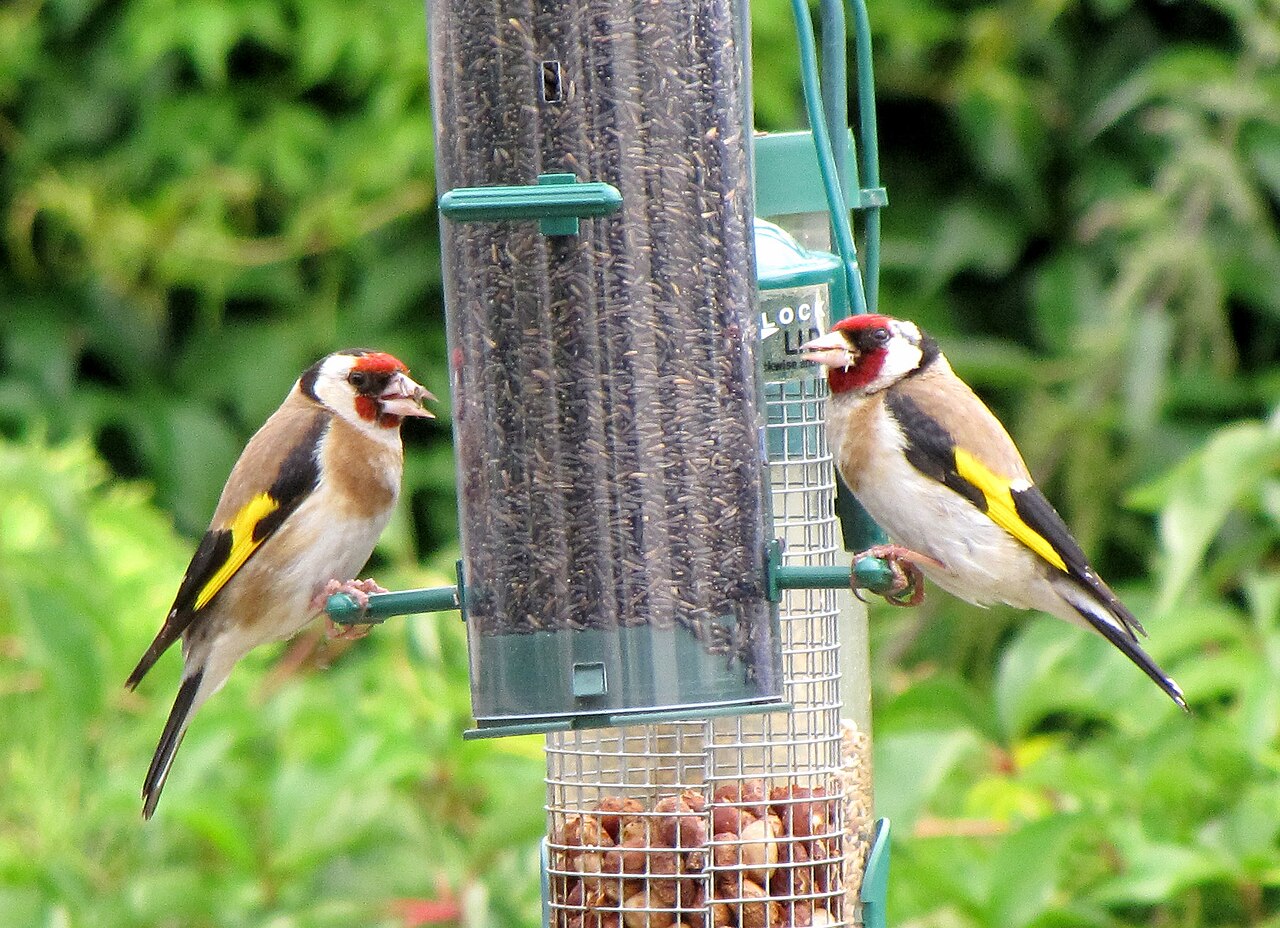
| Nyjer seed | Goldfinches, siskins | Tiny and oily. Needs a special feeder with narrow ports or it pours straight out. |
| Peanuts | Tits, nuthatches, woodpeckers | In a mesh feeder only, never whole and loose in spring — a whole nut can choke a chick. |
| Fat cakes and suet | Tits, wrens, woodpeckers, starlings | The most valuable winter food. Hard fats only. |
| Mealworms | Robins, blackbirds, wrens | Live or dried. Soak dried ones in water in the breeding season so chicks are not dehydrated. |
| Windfall fruit | Blackbirds, song thrushes, redwings | Bruised apples and pears on the ground. Worth saving every autumn windfall for. |
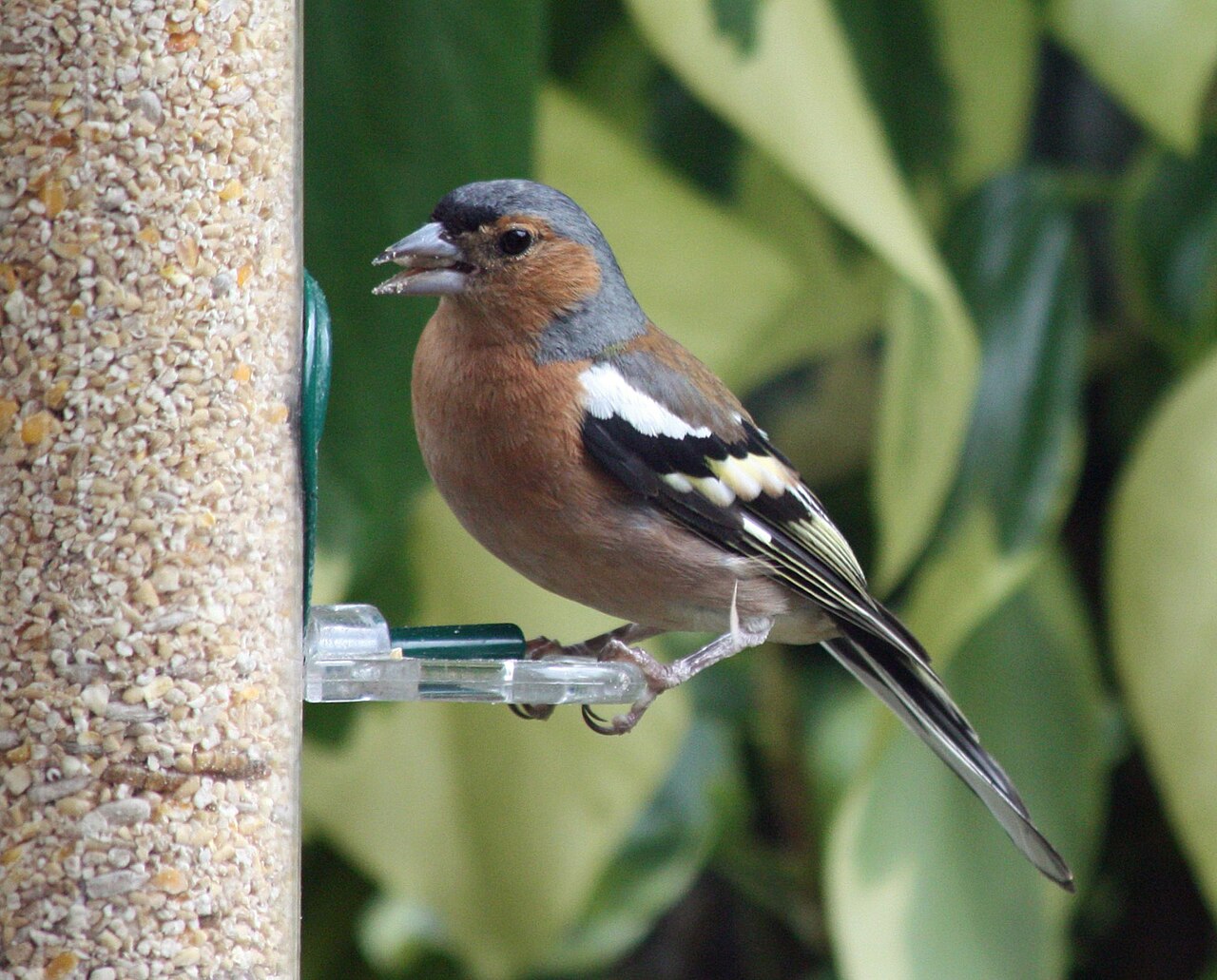
| Mixed seed on a tray | Dunnocks, chaffinches, collared doves | Ground feeders that will not use a hanging feeder. Avoid cheap mixes padded out with wheat. |
A feeder concentrates dozens of birds onto one small surface, several times a day. That is exactly how disease spreads. Trichomonosis, passed on at feeders and bird baths, has cut the UK greenfinch population by more than half since it emerged in 2005, and has hit chaffinches hard too. This is the single most important thing on this page.
Every week or two: empty the feeder, scrub it in hot soapy water, rinse it in a weak disinfectant solution, rinse again and let it dry completely before refilling. Do it outside, not in the kitchen sink, and wash your hands afterwards.
Move the feeder around every few weeks so droppings do not build up underneath, and sweep up spilt seed — it draws rats. Put out small amounts that get eaten within a day or two rather than filling a hopper to the brim.
If you see a bird that looks lethargic and fluffed up, or is drooling and struggling to swallow, take the feeders down entirely for a couple of weeks and clean everything. It lets the birds disperse and breaks the chain.
Position changes who visits and whether they survive the visit.
Close enough that birds can dive into a bush when a sparrowhawk goes over, far enough that a cat cannot launch from it without being seen. Right up against dense shrubs is the worst of both worlds.
Either within about a metre of the glass, so birds cannot build up speed, or well beyond three metres. The middle distance is where fatal collisions happen.
Dunnocks, blackbirds, chaffinches and robins mostly feed underneath rather than on the feeder. A shallow tray of seed on the ground doubles the number of species you see.
A shallow dish for drinking and bathing, topped up daily and cleaned as often as the feeder. In a dry summer it will out-perform everything else in the garden.
The old advice to stop in summer has been overturned. Just switch what you offer: soaked or live food and sunflower hearts in the breeding season, fat and peanuts through the winter.
A baffle above and below a pole feeder works better than any "squirrel-proof" cage. If they win, they win — they are not doing the birds any harm beyond eating the budget.
Photographs from Wikimedia Commons — goldfinches at a feeder. For disease guidance the Garden Wildlife Health project and the BTO publish current advice worth checking, since recommendations change as outbreaks do.